
How it works
Backup Water in Kimberley: Tanks for Sol Plaatje Supply Interruptions
By the WaterQuotes team · Published 2026-11-13 · 6 min read
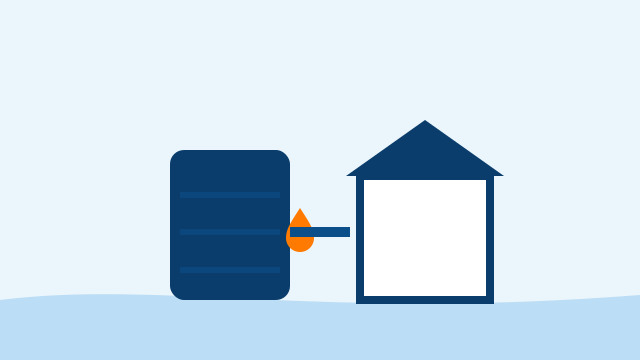
Kimberley’s water supply depends heavily on a bulk pipeline network that has struggled with age, maintenance backlogs, and the particular stresses of a semi-arid climate. For Sol Plaatje Municipality residents, interruptions are rarely a matter of if but when — and often how long. A planned system that stores treated municipal water and delivers it under pressure while the taps are dry is the most straightforward answer most households can put in place without major civil works.
This guide explains how such a system works, how much storage your household actually needs, and what questions to ask before you spend anything.
Why Kimberley’s Supply Is Particularly Vulnerable
Sol Plaatje Municipality draws water from the Vaal-Hartz and Gariep supply systems through bulk infrastructure that spans significant distances across the Northern Cape. When a main breaks, a pump station goes down, or load-shedding disrupts pumping operations, the effect ripples across the city quickly. Unlike a dense metro with multiple redundant feed points, Kimberley’s reticulation has limited ability to reroute supply, so a single failure can leave large areas dry for 24–72 hours or longer.
This is not unique to Kimberley — the broader challenge of backup water systems affects municipalities across South Africa — but the combination of old bulk infrastructure, a small municipal budget relative to infrastructure scale, and high summer temperatures (which accelerate pipe stress and increase demand simultaneously) makes the Northern Cape capital more exposed than many cities.
How a Tank-and-Pump Backup System Works
The principle is simple: you fill a storage tank when supply is good, then draw from it when supply fails.
In practice, a residential system has four components:
- Storage tank — typically polyethylene or fibreglass, sitting above or below ground. Above-ground tanks are cheaper to install; underground tanks are cooler (important in Kimberley’s heat) and aesthetically unobtrusive.
- Float valve or fill controller — automatically tops up the tank from the municipal line whenever pressure is available, so you are not relying on remembering to open a valve.
- Pressure pump — draws water from the tank and delivers it to your household at normal tap pressure. Without a pump, an above-ground tank relies on gravity, which only works well if the tank sits several metres above the fixtures it serves.
- Non-return valve and isolator — prevents contaminated tank water from back-flowing into the municipal supply, a requirement under SANS 241 (2024 edition) and standard good practice.
When supply fails, your pump draws from the tank automatically (if the system is configured for automatic switchover) or at the flick of a switch. For most families the experience during an outage is close to normal — reduced flow pressure is usually the only noticeable change.
If you want to understand exactly what to do in the first hours of a confirmed outage, the guide on preparing for a multi-day outage covers the practical steps in detail.
How Much Storage Does a Kimberley Household Need?
Storage sizing starts with consumption. South Africans use roughly 237 litres per person per day on average, though a consciously water-aware household during an outage can manage on considerably less — perhaps 50–80 litres per person per day if showers are short and there is no garden irrigation.
A useful working approach is to size for three days at a reduced-use rate:
| Household size | Reduced daily use (est.) | 3-day storage target |
|---|---|---|
| 2 people | 120–160 L/day | 360–480 L |
| 4 people | 240–320 L/day | 720–960 L |
| 6 people | 360–480 L/day | 1,080–1,440 L |
These figures assume no garden watering and minimal laundry. Many Kimberley homeowners opt for 2,500–5,000 litre tanks precisely because Sol Plaatje outages can run longer than three days, and a larger tank gives a meaningful safety margin at a relatively small incremental cost compared to the pump and installation.
For a full worked example of how to size for a three-day scenario, see sizing your backup water for a 3-day outage.
If you are ready to find out what a properly sized system will actually cost for your property, compare 3 free quotes — vetted installers, no obligation.
Tank Placement in Kimberley’s Climate
Kimberley is one of South Africa’s hottest cities in summer, with temperatures regularly exceeding 35 °C. This matters for water storage because:
- Heat accelerates bacterial growth in standing water. Tanks should be UV-stabilised and, ideally, positioned in shade or underground to keep water cooler.
- Above-ground dark tanks can reach internal temperatures that make stored water unpleasant and, over time, a health concern if water sits for extended periods.
- Water turnover helps: a system that is regularly drawn down and refilled (because the municipal supply is intermittent) actually maintains fresher water than one that sits full for weeks.
If your tank is for drinking water as well as general household use, water quality under SANS 241 (2024 edition) is the benchmark to hold your installer to. Ask specifically whether the tank material is food-grade and whether the inlet is screened to exclude insects and debris.
Backup Tanks Versus Bottled Water: The Honest Comparison
Some households in areas with unpredictable supply default to buying bottled water during outages. It is worth running the numbers before assuming that is the cheaper path. The article backup water vs bottled water does exactly that, but the short version is that at any meaningful consumption level beyond drinking alone, the per-litre cost of bottled water makes a tank system look economical within a couple of years — sometimes sooner if outages are frequent.
For Kimberley, where interruptions have historically been both frequent and prolonged, the break-even calculation tends to favour a tank system fairly quickly.
What a System Costs: A Johannesburg Reference Point
WaterQuotes does not publish Kimberley-specific installed prices because costs vary by site, installer, tank size, and pump specification. As a reference point from Johannesburg, complete backup tank-and-pump systems typically run R20,000–R40,000 for a standard residential setup, with whole-house examples (larger tanks, higher-capacity pumps) around R55,000. The pump component alone typically costs R15,000–R35,000 installed.
Kimberley prices may differ — transport of tanks and equipment to the Northern Cape, and local installer availability, can both affect the final figure. The only reliable way to know what you will pay is to get quotes from installers who actually work in your area.
Getting multiple quotes is the fastest way to separate a fair price from an inflated one. Request 3 installer quotes and compare them side by side — it costs nothing and takes two minutes.
Questions to Ask Before You Sign Anything
Whichever installer you speak to, these questions will tell you a great deal about whether you are dealing with someone competent:
- What tank material are you quoting, and is it UV-stabilised and food-grade? A cheap tank that degrades in Northern Cape sun is a liability.
- Will the system switch over automatically, or do I need to operate a valve manually? Automatic changeover is worth paying for if you are frequently away from home.
- What pressure does the pump deliver, and will it run my geyser and shower simultaneously? Undersized pumps are a common source of post-installation frustration.
- What happens to the warranty if load-shedding causes pump motor surges? Surge protection should be included or offered as an add-on.
- Is the installation compliant with local bylaws and SANS standards? A reputable installer will know the answer immediately.
Taking notes on these answers across three quotes will make the right choice fairly obvious.
Quick answers
How long do Sol Plaatje Municipality water interruptions typically last?
Interruption duration varies depending on the cause — a burst main, pump failure, or load-shedding-related disruption can each have different resolution timescales. Sol Plaatje Municipality publishes outage notices on its official channels, but planned and unplanned outages in Kimberley have historically ranged from several hours to multiple days. Sizing your tank for at least three days gives a reasonable buffer for most scenarios.
Can I drink water stored in a backup tank?
Yes, provided the tank is food-grade, UV-stabilised, properly covered, and regularly turned over (drawn down and refilled). Water sitting in a hot, poorly maintained tank can degrade in quality over time. SANS 241 (2024 edition) is the South African benchmark for drinking water quality; if your tank system is well-maintained and the municipal supply feeding it meets that standard, stored water should remain safe for normal household use including drinking.
Do I need a pump, or can I rely on gravity from an above-ground tank?
Gravity-fed systems work, but only if the tank is elevated well above your fixtures — typically at least 3–5 metres for reasonable flow. In most suburban Kimberley properties that height is impractical without a dedicated elevated stand, which adds cost and complexity. A pressure pump is usually the cleaner, more reliable solution and allows you to place the tank at ground level where it is easier to fill and inspect.
What size tank do most Kimberley families choose?
There is no single right answer, but 2,500–5,000 litre tanks are common for families of three to five people wanting at least three days of backup at reduced consumption. Larger tanks — 5,000–10,000 litres — are worth considering if your household has medical needs, a small home business, or if past outages in your area have run longer than three days. Getting an installer to calculate your specific household daily usage before quoting is the most reliable approach.
Is a backup water tank system worth it if I already have a Jojo tank for rainwater?
A rainwater tank and a backup municipal water tank serve different purposes and are not interchangeable in Kimberley's climate. Kimberley receives relatively low and variable rainfall, so a rainwater tank may not reliably hold enough water to cover a prolonged outage. A municipal backup tank fills automatically from the supply line whenever pressure is available, ensuring a known volume of treated water is always on hand. The two systems can coexist and complement each other.
Sources & notes
Pricing reflects typical Johannesburg market ranges and is confirmed by installer quotation. References: solplaatje.org.za · Department of Water and Sanitation
Ready to compare? Get up to 3 quotes from vetted backup water systems installers in Johannesburg — free, no obligation.
Get 3 free quotes